Renting: who pays for flyscreen repairs
Tenant or landlord: who arranges and pays for flyscreen repairs in each Australian state, what to do if nothing happens and whether you can fit your own.
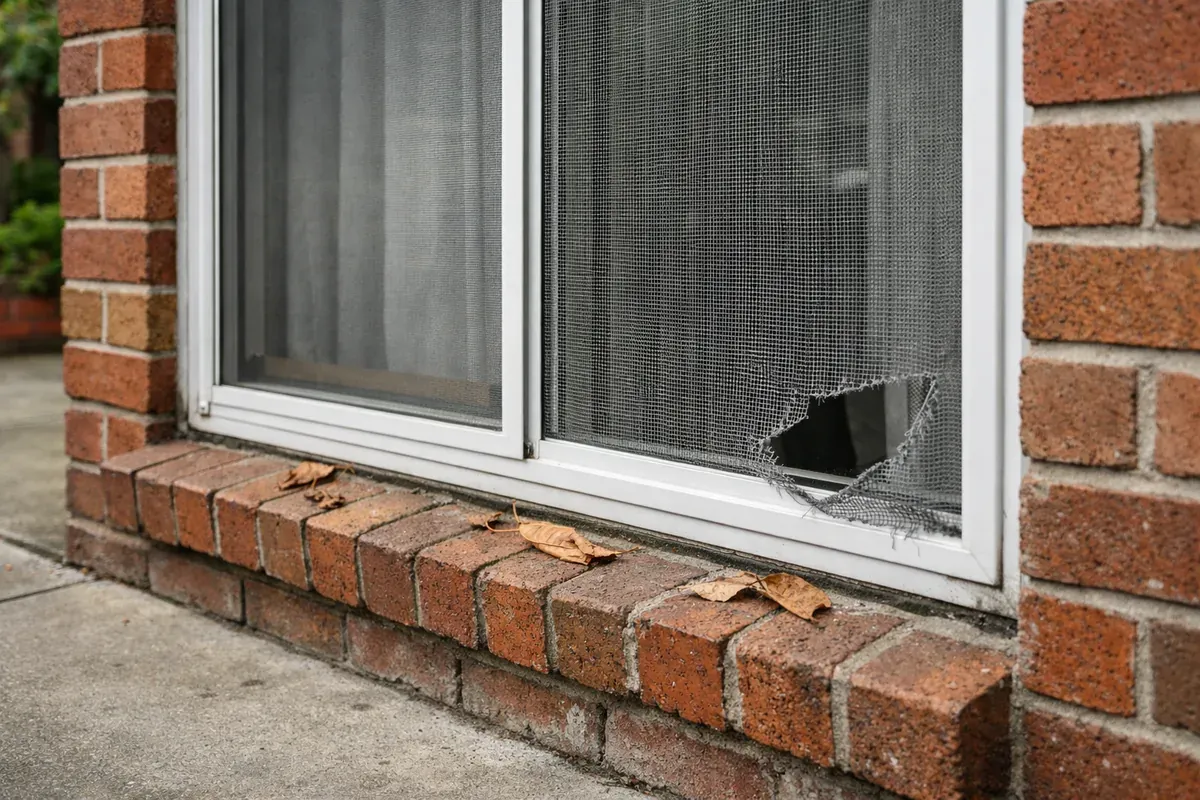
In every Australian state and territory the landlord (or their agent) is generally responsible for repairing a flyscreen that has worn out or broken through age, which is fair wear and tear. The tenant generally pays when they, a guest or a pet caused the damage. Your job as a tenant is to report it in writing, early, and keep a record.
None of the official minimum standards we read requires a rental to have flyscreens at all. In NSW, Victoria and WA, though, flyscreens are named as a change a tenant can ask to make and the landlord cannot unreasonably refuse.
This is general information drawn from each state’s official tenancy pages and legislation, checked in November 2026. It is not legal advice. Rules change, and your lease and circumstances matter, so check your own state’s source (linked below) or ring its tenancy service before you act.
Fair wear and tear or damage
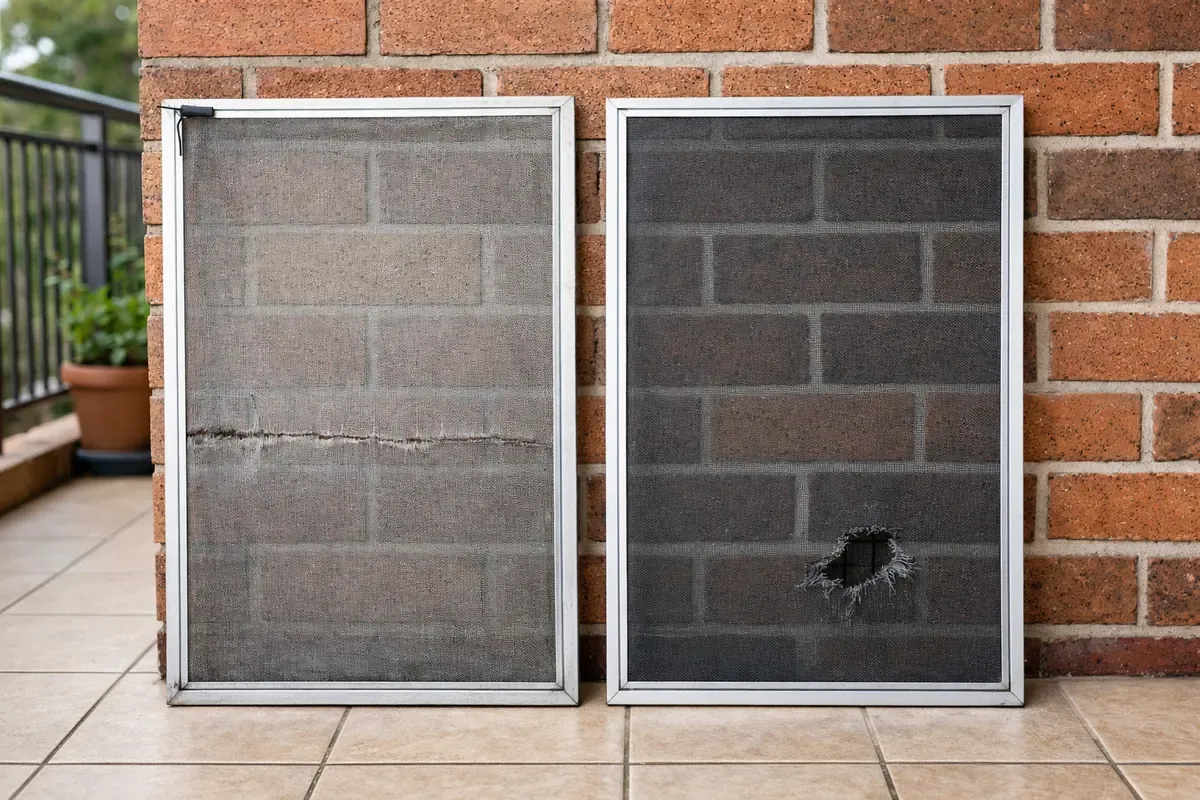
Fair wear and tear is the screen ageing through normal use and weather: mesh gone brittle and split in the sun, spline shrunk and pulling out of the frame, rollers worn on a sliding screen door, a frame that has loosened over the years. The landlord fixes this.
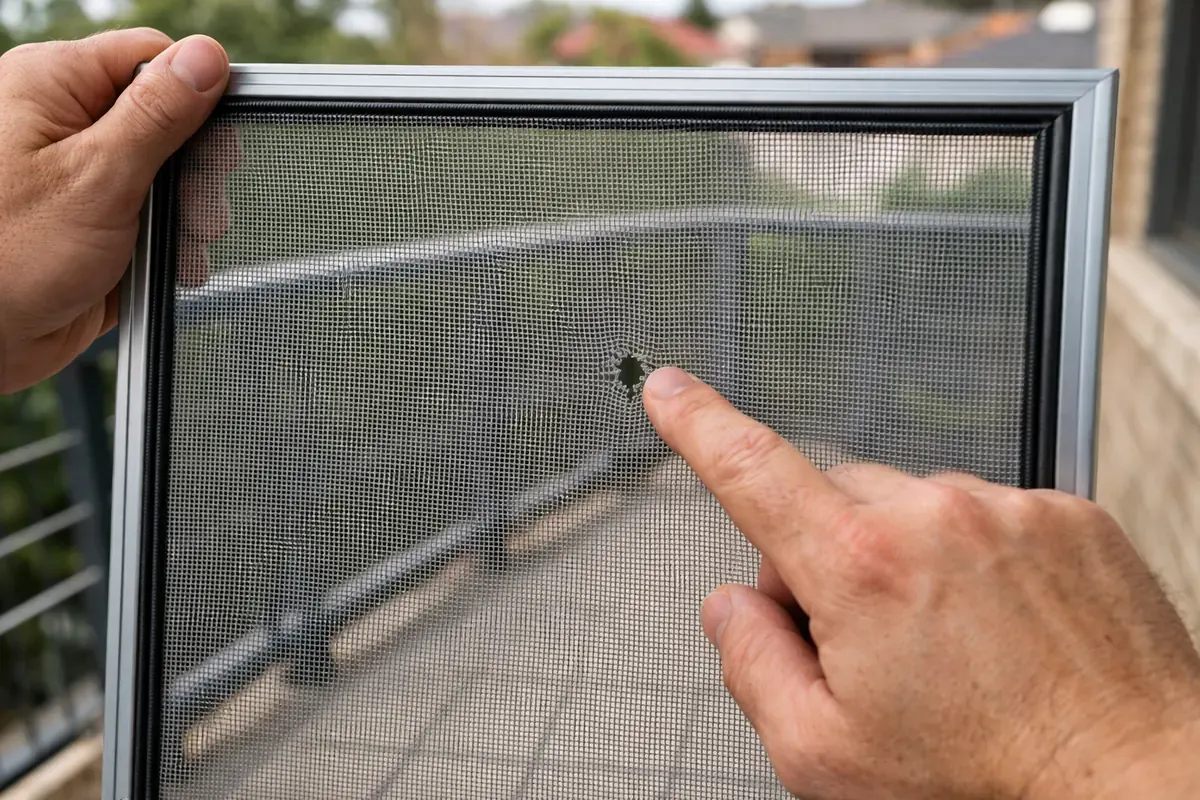
Damage is something you, someone visiting you or your pet did: a dog or cat clawing through the mesh, a child pushing a hand through it, a screen bent while you took it out to clean the windows. The tenant pays for this.
WA Consumer Protection says the tenant is responsible for repairs if they, their guests or pets cause the damage. NSW says tenants are responsible for damage by anyone they allow onto the premises, and Victoria says the rental provider pays for repairs that are not the renter’s fault. Other states word it differently, but each official source we read puts the landlord in charge of keeping the property in repair.
Age counts. In the NT the landlord’s duty is a reasonable state of repair having regard to the property’s age, character and prospective life, and NSW says what is reasonable depends on the age of the premises, the rent and its potential life. A 25 year old fibreglass mesh that splits by itself is a long way from a pet tear in a new screen.
Do rentals have to have flyscreens?
We looked for any mention of flyscreens or insect screens in each state’s minimum standards for rentals.
- Queensland: the minimum housing standards (in force for all tenancies since 1 September 2024) cover weatherproofing, good repair, locks or latches on windows and doors, freedom from vermin, damp and mould, privacy coverings and so on. The RTA fact sheet does not mention flyscreens or screens.
- Victoria: there are 15 minimum standard categories, including windows, window coverings and ventilation. Flyscreens are not one of them. The only “screen” on the Consumer Affairs Victoria minimum standards page is a screen door, mentioned as an exception to the deadlock rule.
- NSW: the seven minimum standards (structurally sound, lighting, ventilation, electricity or gas, plumbing and drainage, water, bathroom facilities) do not mention screens.
- Tasmania: the minimum standards in Part 3B of the Residential Tenancy Act 1997 do not mention screens.
- SA, WA, the ACT and the NT: we found no mention of flyscreens in the official pages linked below or in the NT Residential Tenancies Act 1999.
So we found no rule that says a landlord must fit screens where there are none. Where screens are already there, they are part of the property, and the general duty to keep it in reasonable repair applies to them like anything else.
State by state
| State | Official source | What it says about repairs |
|---|---|---|
| NSW | NSW Government: maintenance responsibilities | Landlord provides and maintains the property in reasonable repair; tenant is responsible for damage by anyone they allow onto the premises |
| VIC | Consumer Affairs Victoria: repairs | Rental provider organises and pays for repairs that are not the renter’s fault; non-urgent repairs within 14 days of a written request |
| QLD | RTA: minimum housing standards | Property must be in good repair and meet the standards; a tenant whose actions cause a failure may have to pay for the repair |
| WA | Consumer Protection: rental home repairs | Landlord keeps the home in a reasonable state of repair; tenant is responsible if they, guests or pets cause the damage |
| SA | SA.GOV.AU: repairs and maintenance | Landlord repairs within a reasonable time; tenants must repair damage they, visitors or other occupants cause |
| TAS | Residential Tenancy Act 1997 | Owner carries out repairs that are not the tenant’s fault, generally within 28 days of the tenant’s notice |
| ACT | ACT Government: during a tenancy | Landlord maintains the property and keeps it reasonably safe and secure; non-urgent repairs within 4 weeks |
| NT | Residential Tenancies Act 1999 | Landlord maintains a reasonable state of repair, having regard to age, character and prospective life; tenant must not intentionally or negligently cause damage |
A torn flyscreen is not on the urgent repair lists we read (those are things like a burst water service, a gas leak or a serious roof leak), so expect it to be handled as an ordinary repair.
How to get a flyscreen fixed as a tenant
- Check the condition report. Look at what was written about each screen when you moved in, and any photos. If a screen was already torn and recorded, say so. In WA, for example, the landlord does not have to fix items noted as not working in the rental agreement, so raise missing or torn screens at move-in.
- Take photos of the screen now, close up and from a distance, with the date.
- Report it in writing to the agent or landlord: an email is fine. Say which window or door, what is wrong and when you noticed. Tasmania’s Act expects tenants to notify the owner within 7 days of a repair being needed, and the other official pages also ask tenants to tell the landlord.
- Be honest about the cause. If the cat did it, say so and ask whether they want to arrange the repair and bill you, or would rather you get it fixed. Sorting it out early is usually simpler than a bond dispute later.
- Keep paying rent while you wait. The official pages in Victoria and WA both say rent must still be paid while you wait for a repair.
- Keep copies of every email, reply and invoice.
If nothing happens
Follow up in writing first, then use your state’s process. Each state has its own forms and time limits, so read the official page or ring the tenancy service before you lodge anything.
- NSW: contact NSW Fair Trading (13 32 20).
- VIC: if non-urgent repairs are not done within 14 days of your written request, you can ask Consumer Affairs Victoria for a free repairs inspection, use Rental Dispute Resolution Victoria, or apply to VCAT.
- QLD: give a Notice to remedy breach (Form 11), allowing at least 7 days, then you can lodge a dispute resolution request with the RTA. QCAT can make a repair order.
- WA: if repairs are not made in a reasonable time, you can give a Form 23 Notice to lessor of breach of agreement.
- SA: you can apply to the South Australian Civil and Administrative Tribunal (SACAT) for repairs.
- TAS: you can apply to the Residential Tenancy Commissioner for an order that the repairs be carried out.
- ACT and NT: the linked sources set out the landlord’s duty but not a simple step-by-step for disputes. Ask the ACT or NT tenancy advice service what to do next.
Can you fit your own screens or a magnetic screen?
Usually you need the landlord’s permission first, in writing. What changes from state to state is how freely they can say no.
- NSW: “inserting fly screens on windows” is on the list of minor changes a landlord cannot unreasonably refuse. Tenants pay for these changes unless the landlord agrees to. See making changes to a rental property.
- Victoria: “flyscreens on doors and windows” are on the list of changes a rental provider cannot refuse without a good reason. They are not on the list you can make without asking. See renters making changes.
- WA: flyscreens on doors and windows are a listed minor modification. You ask with Form 26, the landlord has 14 days to decide, and they can only refuse on limited grounds (such as strata rules, asbestos or heritage listing) without the Commissioner’s approval. See making changes to a rental home.
- SA: changes cannot be unreasonably refused for minor alterations or additions. The official page does not mention flyscreens by name.
- ACT: you write to the landlord for consent. Minor modifications that can be undone generally cannot be refused unless the landlord applies to ACAT within 14 days, and if the landlord neither replies nor applies in that time, they are taken to have agreed. The ACT page does not mention flyscreens by name.
- TAS and NT: the Acts say a tenant must not attach fixtures or make alterations or additions without the owner’s or landlord’s written consent (in Tasmania, unless the agreement says otherwise). Neither mentions flyscreens.
- QLD: the RTA page linked above does not cover changes, so ask the owner or manager in writing and check the RTA’s guidance before you fit anything.
A magnetic flyscreen usually sticks or screws a strip to the frame, so treat it like any other change and ask first. In NSW, a modification that does not penetrate or permanently modify a surface is also on the minor changes list. In an apartment, strata or body corporate rules can apply as well.
What happens at the end of the lease
In NSW, the official page says tenants should leave the property as near as possible to its condition at the start, fair wear and tear excepted, and the other states take a similar approach. The condition report is the reference. A screen that simply aged is not your cost. A pet tear that is still there can be claimed against your bond.
If you fitted screens yourself, the official sources for WA, SA, the ACT and Victoria say you generally remove them (or in Victoria, restore the property or pay the cost) unless the landlord agrees they can stay. If you want to leave them, get that agreement in writing.
If you damaged a screen, getting it fixed before you leave is often simpler than arguing about it later. A small hole may only need a patch, and a full remesh is a common DIY job on a window screen. Tell the agent first. In South Australia, if the landlord offers to do a tenant-caused repair and you agree, the official page says the landlord can charge SACAT’s set rate of $33.85 an hour plus materials (checked November 2026). For a rough idea of what screen businesses charge, see the flyscreen repair cost guide or our cost calculator.
When to get someone in
If the repair is the landlord’s, they or the agent pick the repairer, so you do not need to get quotes. If the damage is yours, a local screen business can remesh or repair it, and the agent may prefer it done professionally. Get a quote for a tenant-caused repair, show it to the agent before you book, and keep the invoice.
Get someone in for screens on upper floors where you would need to lean out or work off a ladder, security screen doors (they often need specialist parts), and bent or broken frames. You can find a local screen business or ask for a quote.
Questions
Does my landlord have to put flyscreens on the windows?
We found no state or territory minimum standard for rentals that requires flyscreens or insect screens. Where screens are already fitted, they are part of the property the landlord has to keep in reasonable repair.
My dog tore the screen door. Do I have to pay?
Generally yes. WA Consumer Protection, for example, says the tenant is responsible for repairs when they, their guests or their pets cause the damage. Damage is different from fair wear and tear, which the tenant does not pay for.
Can I stop paying rent until the flyscreen is fixed?
No. The official guidance in Victoria and WA says to keep paying rent while you wait for a repair. Use your state's repair process instead.
Can I put up a magnetic flyscreen without asking?
Ask first, in writing. NSW, Victoria and WA name flyscreens as a change the landlord cannot unreasonably refuse, but you still need to ask, and other states generally need the landlord's consent for fixtures or changes.
Will a torn flyscreen come out of my bond?
Only if it is damage you, a guest or a pet caused, not fair wear and tear. The condition report from move-in is the main evidence of what state the screens were in when you arrived.